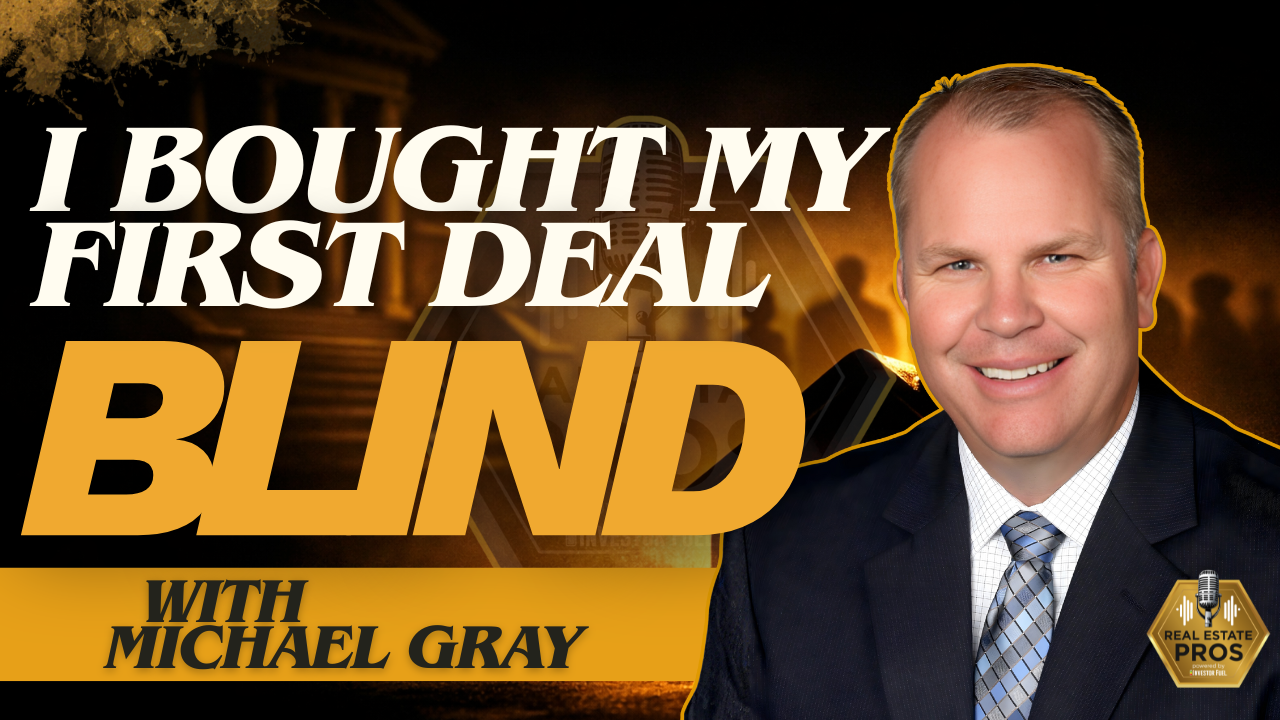
Real Estate Investing in Connecticut: Why On-Market Deals Are Dead and How Investors Still Win
Show summary
In this conversation, Keith Daniel shares his journey as a real estate investor in Connecticut, discussing the challenges and strategies involved in navigating the local market. He emphasizes the importance of off-market deals, networking, and leveraging social media to connect with others in the industry. Keith also offers insights into expanding investment opportunities beyond Connecticut and the significance of focusing on one investment strategy at a time.
Key takeaways
- Keith bought his first rental in 2019 on-market for about $275K, put $50-60K into renovation, rented it for four years, and sold it in 2023 for about $430K.
- In Connecticut's current market, Keith targets flip purchases between $300K and under $500K and aims to sell for $600K-$700K, with typical rehab budgets of $75K-$90K.
- He hasn't bought anything on-market in Connecticut in three to four years; regular buyers bidding up prices have pushed investors entirely into off-market deal sourcing.
- He recently bought two off-market multifamily properties in Norwalk (a four-family and a three-family) using hard money/cash, both needing rehab, and is now refinancing them.
- As a software consultant by trade, Keith handles the finance and insurance side of deals and partners with others who manage construction and rehab.
- His advice for new investors in expensive markets: pick one investment strategy (flips, rentals, Airbnb, or wholesaling), go all in on it before pivoting, and consider house hacking a small multifamily as an entry point.
- Because Connecticut capital runs out quickly, Keith is expanding into out-of-state investing to stretch his money, do more flips elsewhere, and generate more cash to keep buying in Connecticut.
- He emphasizes networking — including meeting people through social media (Keith_love_REI) and hosting a monthly in-person meetup in Norwalk — as a path into real estate even without capital, by becoming a deal finder.
In this episode
- 00:00Pick one strategy and go all in
- 02:05Intro: Keith Daniel, Connecticut investor
- 02:32Getting started in 2019 with a first rental
- 04:34Connecticut market tiers and flip price points
- 06:07Rehab budgets on flips
- 07:14Managing contractors as a software consultant by trade
- 08:24Why on-market deals dried up in Connecticut
- 09:14Two off-market multifamily deals bought with hard money
- 10:21New construction and competition in Connecticut
- 11:52Advice for getting started: house hacking and investing out of state
- 15:43Building an audience through social media and networking
About Keith Daniel
Keith Daniel is an active real estate investor in Connecticut doing flips and rentals, focused on sustainable cash flow, smart growth, and long-term financial freedom for his family. He is a software consultant by trade who partners with others on the construction side of his deals, and he started investing in 2019 after years of encouragement from a mentor/cousin. He shares his journey on Instagram and YouTube as Keith_love_REI and hosts a monthly real estate meetup in Norwalk, Connecticut.
Listen to the audio
“Pick one thing, go all in on it. Just do it once or twice. Figure out if you like it and then pivot.”
Keith Daniel
“I haven't bought anything on market in the past, I would say, three to four years... It's been an off-market game building relationships with wholesalers or just even talking to people.”
Keith Daniel
“Eventually the money runs out and you have to figure out how to stretch the money, and that's the reason that I'm more going towards out-of-state investing.”
Keith Daniel
Questions answered in this episode
Is it still possible to find on-market deals in Connecticut?
Keith Daniel says no — he hasn't bought anything on-market in Connecticut in three to four years. Regular buyers push prices up and are willing to pay more, so he now relies entirely on off-market deals sourced through relationships with wholesalers and direct conversations with sellers.
What does a typical flip look like in Connecticut in terms of price and rehab cost?
Keith targets purchase prices around $300,000 to under $500,000 and aims to sell on the back end for $600,000 to $700,000. Rehab budgets on his flips typically run $75,000 to $90,000.
How did Keith Daniel finance his recent multifamily deals?
He bought a four-family and a three-family property in Norwalk using hard money/cash, since both needed rehab. He put rehab money into them and is now in the process of refinancing.
What's the best way to start investing in real estate in an expensive market like Connecticut?
Keith recommends starting with a small multifamily and house hacking — living in one unit and renting out the others. He also says that once your money runs out in an expensive local market, it makes sense to invest out of state to stretch capital and generate more cash to eventually buy more in your home market.
Why is Keith looking at investing outside of Connecticut?
He says Connecticut is expensive and eventually the money runs out, so investing out of state lets him stretch his capital, do more flips elsewhere, and build up more cash to keep buying in Connecticut, which he still likes as a market.
How does Keith Daniel generate deal flow and leads without a construction background?
He's a software consultant by trade and partners with people stronger on the construction side while he handles finances and insurance relationships. For deal flow, he builds relationships with wholesalers and sellers directly and credits networking — including hosting a monthly meetup in Norwalk — as key to finding deals.
Resources and links
Full transcript
Keith Daniel (00:00)
But it’s all, you know, the biggest thing is figuring out what it is that you want to do. Like you have
Many people start now and it’s like, I want to start with Airbnb. I want to start with Reynolds. I want to do flips. I want to do wholesaler. Pick one thing, go all in on it. Just do it once or twice. Figure out if you like it and then pivot. But get, you know, trying to do everything all at once. You’ll never do anything. But if you pick that one thing and go all in on it, that’s that’s the that’s where it starts, I think.
Dylan Silver (02:05)
Hey, folks, welcome back to the show. Today’s guest, Keith Daniel is an active investor. He’s active in a flips rentals in Connecticut. His focus is on sustainable cash flow, smart growth and a long term freedom for him and his family. can follow his journey on Instagram and YouTube at Keith_love_ REI. Keith, thanks for taking time out today to come on the show.
Keith Daniel (02:29)
Thanks for having me, Dylan, I appreciate it.
Dylan Silver (02:32)
Hey, it’s great to meet you, great to have you on here. We were talking a little bit before hopping on here. New England is one of the more challenging places to get started as a real estate investor. You’re in Connecticut. How did you get started investing in real estate out there?
Keith Daniel (02:48)
So honestly, I have a mentor slash cousin that’s been telling me about getting into investing for many years. And finally, in 2000, about 16, no, 2019, I would say, I pulled the trigger, I started my LLC, and we bought, I bought my first rental property.
Dylan Silver (03:10)
It’s rental property, 2000 around that time frame. Was that an on-market deal, off-market deal? How’d you find it?
Keith Daniel (03:16)
It was on market 2019 it was before you know stuff got really crazy as far as and prices started shooting up so we we Purchased it for I believe we got it for about 275 at that time We put probably about 50 K or so into renovation 50 to 60 K in the renovation and getting it ready put tenants in it
Dylan Silver (03:23)
Yeah.
Keith Daniel (03:41)
put long-term tenants in it and we rented that for probably four years before we sold it and we probably doubled up. We sold it in 2022 for about, or 2023 for about 430 K.
Dylan Silver (04:00)
I want to ask you about finding these deals, right? So when you’re in New England, when you’re in Connecticut, you’ve got a higher entry point, right? And that was a different timeframe, right? So when you’re buying in 2019 versus buying today, you’ve got two totally different market conditions, right? But what’s the typical entry point for a single family home that you’re looking at in Connecticut?
Whether it’s, know, distressed, maybe you can give me a couple different grades. Here’s what a distressed home will run you, this is what on market, and maybe this is what, you know, a high-end flip will look like.
Keith Daniel (04:34)
Absolutely, so you Connecticut has about Three different markets right so you have your lower income area, which is still expensive You have your mid-income area, and then you have your we have places like Greenwich that are million dollar homes so for I for flips that we look for we Pretty much try to get them for around
you know, to 400K, a little under 500K. And then we look to sell it for six to 700K on the backend as well.
Dylan Silver (06:01)
And how much in rehab is one of those flips? Yeah, I’m sure it’s going to range depending on the scope of work, but what’s the sweet spot for you?
Keith Daniel (06:07)
⁓
It’s expensive. It’s been usually around 75 to 90k would have been the average as far as flips that I’ve been doing in this area. Yeah.
Dylan Silver (06:20)
And when we talk about flipping, I certainly know what it’s like to go through that process. Prior to being a Realtor, I worked in the Distress Seller space, connecting Distress Sellers with investors. And you talk about like an entry point of around 300,000, right? I would see, we would get properties that we would assign and the end buyer would end up paying $60,000 in Texas.
Keith Daniel (06:46)
Yeah.
Dylan Silver (06:47)
These were not like in some podunk areas. This would be like San Antonio. You know, it was distressed. You know, it might have been just under livable. But, you know, with about $50,000 worth of work, it could be very much rental grade, especially if someone had their own crew, right? How did you go about managing rehab on these properties? Did you have a do you have a background swinging a hammer and in contracting? Or did you have to find crews for this?
Keith Daniel (07:14)
I’m a software consultant by trade, I partner up with people that are better at that area than me. So I’ll handle the back end as far as the finances and those type of things, the relationships with insurance and all those type of things, while other people, my partners, would be more on the construction side and handling that side.
Dylan Silver (07:38)
Now, specifically when we’re talking about buying on market. So 2019, and I’ve heard this before, by the way, correct me if I’m wrong here. 2019 and beforehand, maybe going back to like 2014, there was almost this sentiment, especially as time progressed in that duration, where like, as long as you’re buying a deal that underwrites and makes sense on paper, you’re gonna make money. These deals, you could find them off market, on market.
especially in like multifamily for instance, people were like hitting their exit, their pro forma and half the time. But things have changed. If people are looking on market right now, what kind of deals are there? Are there any deals on market right now in Connecticut?
Keith Daniel (08:24)
Not in Connecticut. Not in Connecticut. I haven’t bought anything on market in the past, I would say, three to four years. Yeah, on market has not, it’s just not finding it on market. It’s too many people. You have a lot of regular buyers that are pushing up prices and stuff and that are willing to pay more. So yeah.
It’s been an off-market game building relationships with wholesalers or just even talking to people. You never know what you might come across. The two multifamilies that I just bought here in Narwhal, our relationship base, we talked directly to the sellers and they just happened to want to sell at the same time. We were talking to them, telling them we were interested in buying stuff.
Dylan Silver (09:14)
Were those cash offers that you made, seller finance, what was the structure of those deals?
Keith Daniel (09:19)
⁓
It was cash hard money. We used hard money to purchase them. had they needed both of them needed some rehab So we put a lot of rehab into them and then we’re in the process of refinancing those now
Dylan Silver (09:32)
How many, how many torches is that? It sounds like two deals.
Keith Daniel (09:34)
It’s two deals. One was a four family and one was a three family.
Dylan Silver (09:38)
Okay, when when
we talk about the multifamily space specifically, I’ve seen, especially in Texas, that there’s a lot of movement towards new construction, away maybe to some degree from fix and flip and then towards multifamily. And I think a lot of that is just driven by, when you’re competing with builders that are putting up homes for $240,000 and you’re trying to flip something for about that,
It’s tough, especially when they’ve got lower rates. It’s brand new. They’ve got, you know, a builder warranty and what have you. In Connecticut, I don’t imagine that you have the exact same forces at play. Is there ground up construction happening in Connecticut or is it already developed enough where there’s not really that?
Keith Daniel (10:21)
Mostly developed enough where it’s not much we have a couple of pockets of new construction, but I mean that’s even Super expensive You know so even though they could get the you know interest rates lower and stuff. It’s still a higher purchase market It’s not for the new buyer a new home buyer ⁓ That’s moving in
Dylan Silver (10:40)
Yeah.
Yeah, you know,
that can definitely have a significant impact on how flippers particularly are going about their business. You mentioned before hopping on here that you’re maybe looking also at investing outside of Connecticut. For folks who are living in Connecticut right now, they’re looking at, you know, how I want to get into real estate.
Is it feasible for folks to look at, I don’t know, New Hampshire, to be looking at some of these other markets, maybe looking west towards the Midwest as well? What would be your advice to folks if they’re looking at getting in?
Keith Daniel (11:52)
You’re not getting in it all depends on their money as far as hot like I You know, I started out in Connecticut. I’m still even now buy stuff in Connecticut It’s a lot more expensive but eventually the money runs out and you have to figure out how to stretch the money and that’s the reason that I’m more going towards out-of-state investing just to be able to stretch my money do some more flips out of state and then
have more cash to be able to buy stuff here in Connecticut. I like Connecticut. you know, getting in, I would say to start out, I would probably do like a small multifamily live in one unit and run out the other. House hack would be the way I would jump in if I was starting out.
Dylan Silver (12:32)
Thank you.
I’ve heard great things about DSCR for that as well. If folks have above 700 credit, even if they are not experienced investors and even if they’ve not bought a home before, this was not available to me you know 10 years ago. I would have loved this, right? Hey, you may be leaving college and you may have perfect credit, but you got no credit effectively. You have a couple of consumer credit cards. You may or may not have a car.
Keith Daniel (12:51)
Yeah.
Dylan Silver (13:05)
but you can buy a quadplex with a DSCR loan? Come on now, that’s good.
Keith Daniel (13:09)
Yeah, yeah,
no, absolutely. But I don’t know. haven’t, I guess most of mine, they won’t let me live in it. If a D. Well, not they, you have to buy, you have to do that. And usually in a business or it’s gotta be a ⁓ place that you can’t live in, at least what, what I’ve experienced with lenders, as far as DSCR loans. I have ⁓
Dylan Silver (13:18)
They won’t let you live in them.
That’s very interesting. So
even if it’s a quad, they won’t let you live in one unit, I guess. Maybe I could see that. I’m not exactly sure what the arithmetic or how they’re underwriting that. One of the things that I’ve learned about lenders is that every lender is gonna have their own flair, their own way of looking at it. Especially now that I’m a realtor, I see it like night and day from when I was not because beforehand,
I would go and I talk to a lender and maybe I would get some discouraging news and I think, well, this isn’t for me. Now I know the lenders and I’m like, this guy told them they couldn’t get approved, just go to the other person. Like I know him, I know he or she personally, like they’re not the hardest working person. Like they probably took one look at this and was like, yeah, I’m not gonna mess with that. But especially now that I know, Hey there’s down payment assistance programs, there’s so much that you can do to help.
first time buyers and even in markets that are maybe more expensive as an entry point. And then when you’ve got some of the other creative things that are coming out right now, there’s ways to make these deals happen.
Keith Daniel (14:38)
Absolutely, absolutely.
Dylan Silver (15:23)
I do want to pivot a bit here Keith and ask you specifically about how you’ve seen folks maybe follow you along this journey. I know you’ve got the YouTube channel, you’ve got the Instagram. Have you had folks reaching out to you asking, hey how do I get started in this? and you’ve been directing them. How did the social media come about for you?
Keith Daniel (15:43)
So yeah, so that’s the biggest thing is just being able to help people and you know, having people reach out has been awesome. I’ve met several people for coffee, rekindled friendships that I had in high school, the people that I hadn’t talked to in years and they’ve reached out and was like, hey, I know you, I know you invest, let’s sit out and chat. And uh you know
But it’s all, the biggest thing is figuring out what it is that you want to do. Like you have
Many people start now and it’s like, I want to start with Airbnb. I want to start with Reynolds. I want to do flips. I want to do wholesaler. Pick one thing, go all in on it. Just do it once or twice. Figure out if you like it and then pivot. But get, you know, trying to do everything all at once. You’ll never do anything. But if you pick that one thing and go all in on it, that’s that’s the that’s where it starts, I think.
Dylan Silver (16:37)
Yeah, I do think that networking is huge, right? So if you don’t have the money for a deal, people are shocked to hear this. But from almost every guest that I’ve spoken with, networking, networking, networking, right? There’s so many different ways to do it. There’s shaking hands. Yes, but you could also talk like we’re talking. You can hop onto Zoom calls. If you do a little bit of everything, would say if you wherever you’re out in the United States, if you can find a way to get to one real estate networking event, I would say
every week, right? And you can find them, they’re all over the place or something tangent, right? It might not be real estate. Maybe you go to insurance, you go to one a week, hop on a Zoom a week. Even if you don’t have the money for the deal, you can then become the deal finder and that can be your on-ramp into real estate investing.
Keith Daniel (17:25)
Absolutely,
absolutely, 100%.
Dylan Silver (17:29)
We are coming up on time here, Keith. I mentioned the social media that you’re active on, Keith, underscore love, underscore REI. It sounds like you’ve got some deals working in the multifamily space. Any new projects that you’re working on or how can our audience reach out to you if they’ve got questions or would like some feedback?
Keith Daniel (17:45)
Like
you said, through the social media is a great way to reach me. I respond to all my messages as far as inboxes. I’m an open book. I’m here to help people. I’ve got help. I’ve got mentors myself that I lean on and ask questions to and that I do deals with actually even though you know. You never know, like you said, networking is huge. I host a meetup.
Also here in Narwhal, that we do once a month, just to get around people and just to be around people that’s talking about the same things and going in the same direction that you are is amazing. You’ll never realize how far it’ll take you.
Dylan Silver (18:24)
Keith, thank you so much for your time today. Thanks for coming on the show.
Keith Daniel (18:27)
for having
me Dylan, I appreciate it.